
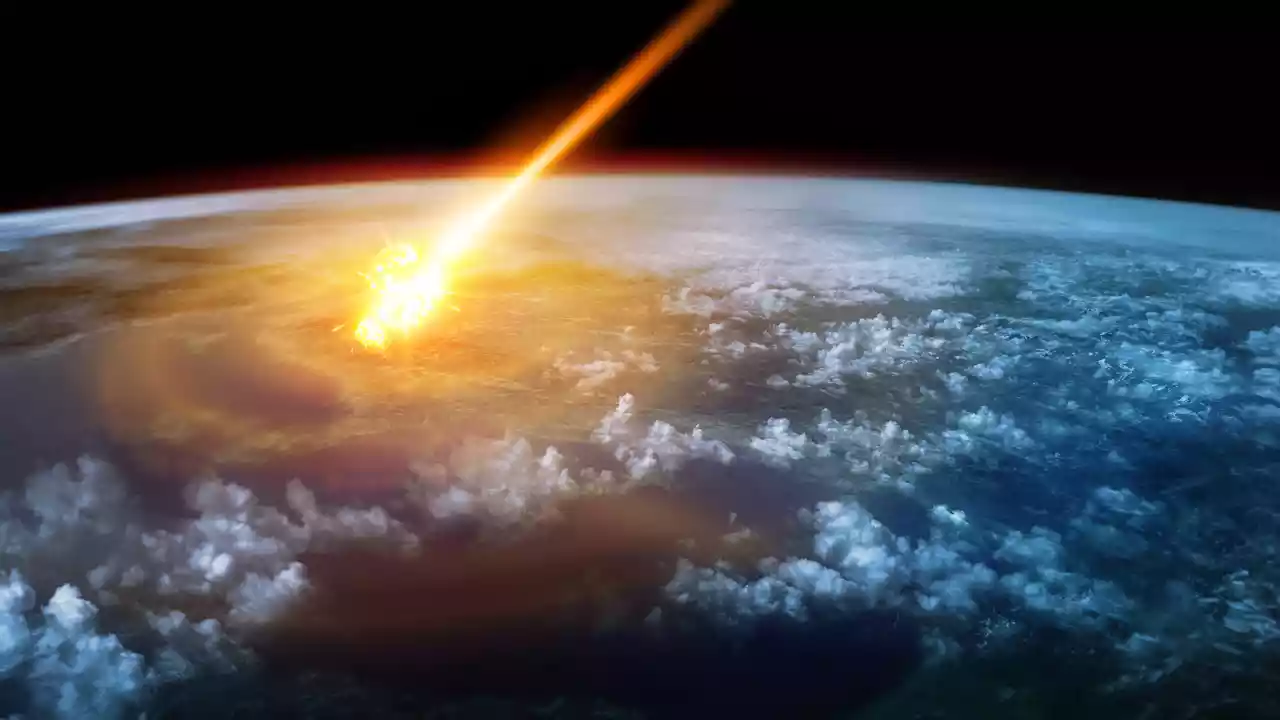
The people of Earth endured a global cataclysm VERY recently in geologic time. Many did not survive.
But hang on. It gets even more interesting. It’s likely that this violent event wiped out pockets of civilization that were even more advanced than our own, just in a different way. (No skyscrapers and cell phones.) First let’s look at the dramatic event that wiped the global slate clean.
According to mainstream science, our Earth experienced a powerful yet mysterious event lasting 1,200 years, well within the epoch of so-called modern humans. It was a period of extreme cold that began and ended almost overnight.
The period began with massive fire and ended with monster tidal waves and flooding followed by a rapid rise in sea level. Such a rise in sea level inundated large areas that were highly populated. Could this have been the biblical flood remembered by cultures around the world?
Scientists have named this puzzling event the Younger Dryas. It began about 12,800 years ago and ended about 11,600 years ago. This was an extremely unpleasant time characterized by sudden extreme cooling followed by equally sudden and extreme warming. Weird.
Mainstream archeology accepts that it happened but debate its cause.
The Ice Age
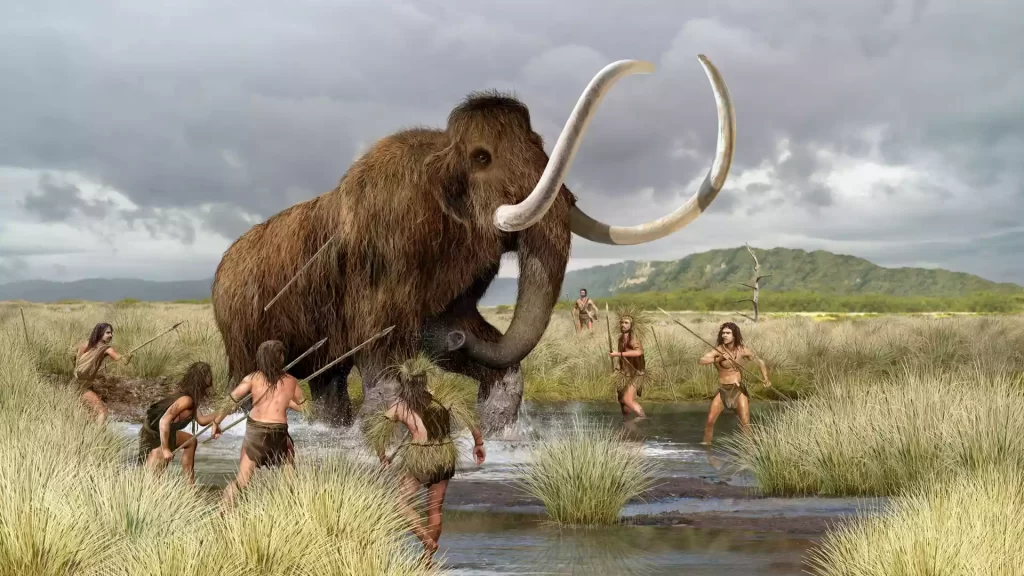
The Younger Dryas began at a point in time near the end of our most recent “ice age” when our ancestors hunted wooly mammoths with spears. There were plenty of people living at that time, just not in the coldest northern regions of the planet.
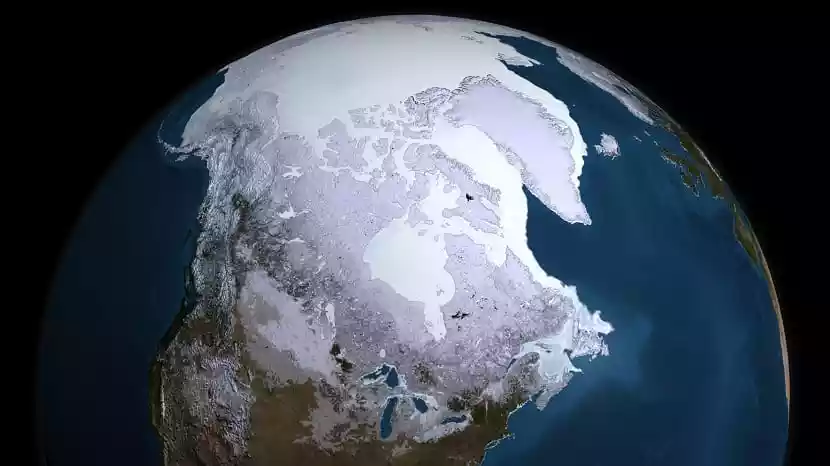
For perspective, today about 11% of our planet’s land area is covered in ice. At the peak of the most recent ice age 18-20,000 years ago, about 30% was covered. That left 70% available for human habitation.
Back to the Younger Dryas. Since 2007, a group of respected scientists have promoted a theory to explain its cause. They’ve put together something called the Younger Dryas Impact Hypothesis which proposes that the northern icy region of our planet was struck by multiple fragments of a large disintegrating comet. These impacts caused immediate cooling in the following way.
The large fiery impact caused huge amounts of fresh meltwater to pour into the Atlantic stopping the important deep-ocean current known as the gulf stream. Normally the gulf stream helps maintain the temperature of the entire planet by carrying warm water from the equatorial region northward and cold water southward. That was stopped dead in its tracks.
Also, evidence shows a spike of massive extinction that took place at the beginning of the Younger Dryas.
The Younger Dryas was so cold that the northern ice sheet, which has been shrinking, now began to grow larger again.
How did the Younger Dryas suddenly end?
What caused the sudden and extreme warming that marked the end of the Younger Dryas, 11,600 years ago? It is thought by some that another cometary fragment struck the ocean and raised massive amounts of water vapor into the atmosphere. This produced a warming“greenhouse” effect so familiar to us today.
This rapid warming further melted the remaining ice cap and produced a signifiant rise in sea level known in science as Meltwater pulse 1B.
An ocean impact of this kind would unleash a colossal tidal wave that would scour the land, leaving nothing behind.

Is it coincidence that the destruction and submergence of Atlantis, as told by Plato, falls on exactly the same point in time as the dramatic end of the Younger Dryas, a point in time that has been confirmed by modern geological science?
The Younger Dryas is interesting. But what’s even more interesting is its profound affect on human activity at the time. More on that in a moment.
Where’s the evidence?
It’s now accepted science that the dinosaurs were wiped out by the impact of a huge object from space that hit the Gulf of Mexico leaving a giant crater. It wasn’t just the terrible day of the impact that killed the dinosaurs but also the fatal cold that persisted after that.
That dinosaur-killing event, about 66 millions years ago, left a distinct black soil layer containing so-called “impact proxies” iridium, nano-diamonds, platinum, melt glass, soot and carbon microspheres. These impact proxies can only be explained by a powerful cosmic impact. Nano-diamonds can only be explained by the extreme shock and heat of such an impact, estimated to exceed 2,200 degrees C. The black soot strongly suggests fire throughout the land. This was 66 million years ago. What about the recent Younger Dryas only 12,800 years ago?
The recent Younger Dryas event left behind exactly the same type of layer with the same materials. It is thought that these large comet fragments hit the northern ice cap unleashing tremendous flooding and much more.
Some researchers believe that the multiple cometary fragments that caused the Younger Dryas came from a group of objects that circle the sun in what is known as the Taurid Meteor Stream. Some of those objects are large, more than a mile in diameter. What more do we know about cosmic bombardment of Earth?
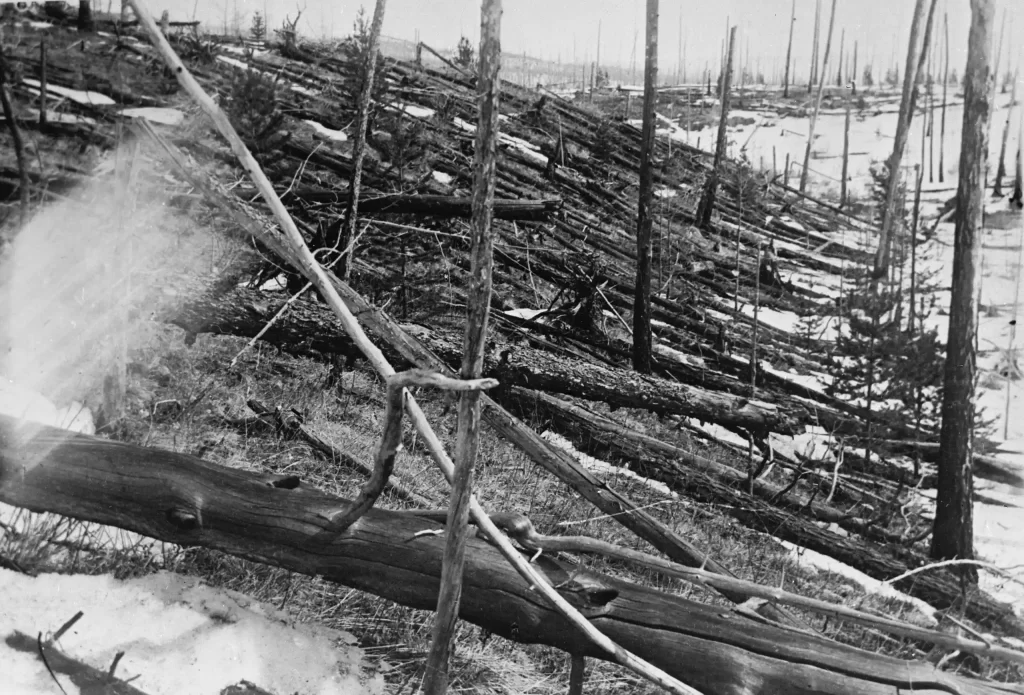
In June of 1908, a celestial object that might have been part of the Taurid Meteor Stream entered the atmosphere at extreme velocity causing an “air burst” that devastated a remote region in Siberia. The Tunguska event released the equivalent energy of multiple nuclear bombs and flattened 80 million trees over an area of 830 square miles.
Only in the past 30 years have we had the technology to spot and track incoming astroids (which don’t produce a luminous tail like comets). We are discovering that large objects whiz by Earth all the time. In one recent case an astroid two miles wide sped past Earth at 40,000 mph. In another case a large object came within 26,000 miles of Earth’s surface.
We would be wrong to scoff at repeated mythical references to devastating catastrophes caused by activities in the sky, a.k.a. the heavens.
It’s important to understand our past
We cannot fully understand who we are today unless we understand our origins, where we came from and how we got here. It’s growing increasingly clear that the story we were taught in school about our ancient past is inaccurate or even radically wrong.
For 50 years, archeologists have insisted that no advanced civilization existed on Earth prior to the Younger Dryas 12,800 years ago. Researcher and author Graham Hancock suggests that such a conclusion is premature since only a small fraction of the Earth’s habitable land has been closely examined by archeology.
The red areas below represent land that was exposed and habitable during the ice age when the ocean surface was 400 feet lower than today. Ireland, England, and Europe were one continuous land mass. The same was true of the entire area around Malaysia, Indonesia, and the Philippines. The warm equatorial region would have been prime real estate for human habitation. Yet, because these areas are now underwater, they have not been explored except to look for shipwrecks.
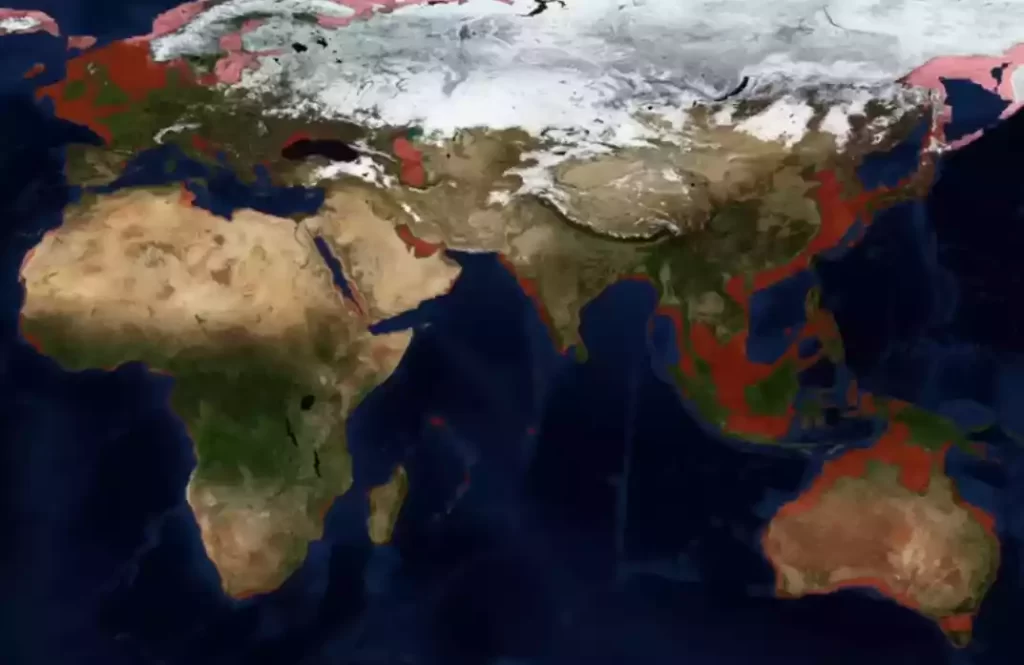
Furthermore, any civilization within reach of the great flood would have been destroyed and washed away, leaving little to no evidence behind. Don’t assume that an advanced civilization prior to the Younger Dryas must always cut stone into large blocks that would be easy to spot.
Further still, abundant myths, legends, rituals and artistic symbolism around the world refer to a lost civilization of a former golden age. While some may argue that cultural evidence like this refers to internal Jungian archetypes, others strongly believe that the myths and legends provide a kind of living memory of concrete objective events that occurred in the external world of three-dimensional time and space, our historical past. I like the latter school of thought.
One problem with carbon 14 dating.
Ancient earthworks and stone structures like the Sphinx in Egypt typically fall into disrepair and must be restored. These restorations can create a layering effect, where the upper or surface layers are younger (more recent) than the older deeper layers.
Only organic material like wood and bone (not stone) can be dated using the carbon 14 method.
Because of these two facts, it is conceivable that some important artifacts of history have been wrongly dated. This can be so, because the organic human remains of the workers including charred wood from cook fires belong to more recent renovations rather than the original construction. This is especially true of earthworks like sacred mounds and earthen pyramids.
Characteristics of a developed civilization
What do I mean by a “developed” civilization? Usually this means a people who practiced agriculture, used some form of writing, and who lived in large settlements and cities. Typically, developed cultures also had an understanding of mathematics, astronomy, urban planning, and engineering.
Who were the less developed but “durable” people on the planet who knew how to survive? They were and are the so-called hunter-gatherer societies. Some of these people still exist today in the Amazon basin of South America. Some have not been contacted yet.
The hunter-gathers of 12,000 years ago lacked electricity and all that goes with it. They possessed little if any items made of metal. But they did possess knowledge of their environment and lots of it. They possessed intimate knowledge of the ways of mother nature and her ability to provide food and shelter.
By contrast, members of “developed” civilizations in the past had what we call technology. For example, they understood how to use the sun and stars to navigate the vast oceans, to determine a boat’s position at sea.
At sea it is relatively easy to calculate one’s north-south position or latitude. But calculating the east-west position or longitude is far more difficult. In our day, this feat was not possible until the development of precise chronometers in the 19th century. It is conceivable that certain people in the ancient past knew how to determine their location at sea using other forms of technology or powers unlike our own.
DNA evidence strongly suggests that humans from Australia and Papua New Guinea crossed the vast Pacific to reach South America a very long time ago. It is not clear what navigational technologies these hardy sea farers had. More recently, sailors in the so-called Polynesian expansion, 3,000 years ago, somehow crossed vast distances in the Pacific. Were they sailing blind? I doubt it.
Advanced technologies
Consider the Great Pyramid of Giza in Egypt. How was it constructed? How were 2.3 million heavy blocks of stone assembled with astonishing mathematical precision?
We do not have a satisfactory answer. The Great Pyramid defies today’s logic. Did the builders have access to abilities unlike our own? Many people would say yes.
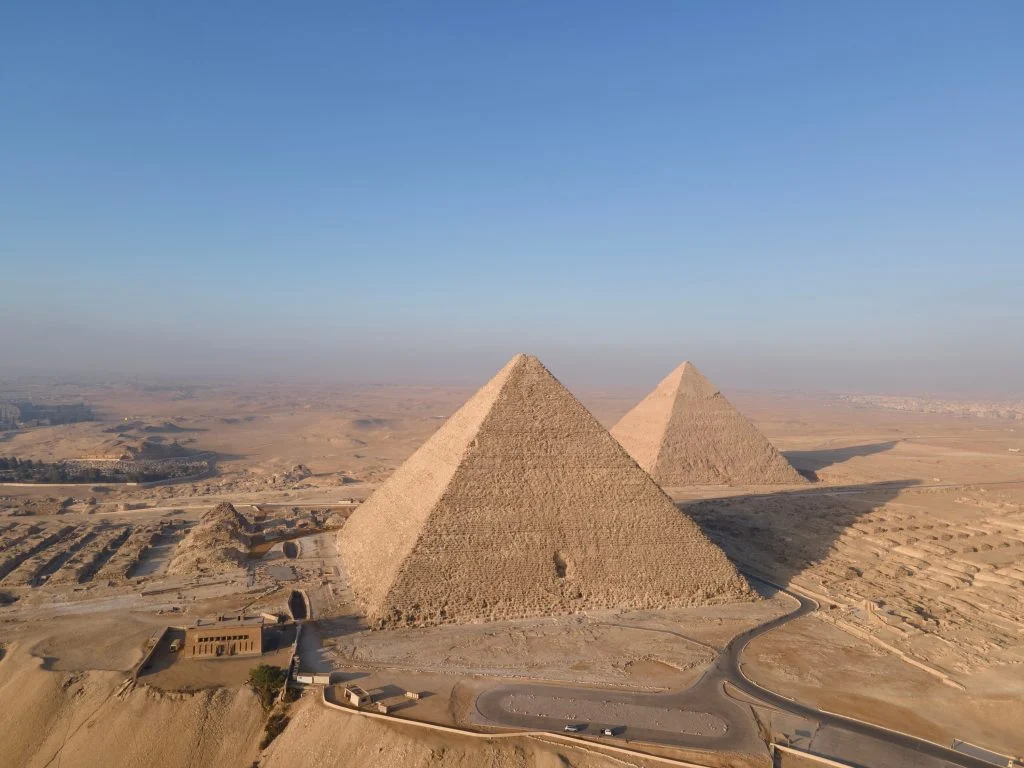
Egyptian texts tell us that priests were performing some form of chanting as 70-ton blocks of granite were lifted hundreds of feet above ground to form the ceiling of the King’s chamber and other chambers above that. This strongly suggests that they had knowledge of resonant frequencies and other powers unknown to us today.
The construction of the Great Pyramid is but one example of people shaping and moving massive pieces of stone. The many Inca ruins in the Peruvian Andes and Stonehenge in the south of England provide other examples where extremely large and heavy stones were shaped, moved and positioned with a high degree of precision. Also Stonehenge is similar to the Great Pyramid in that the stones were arranged with precise celestial alignment. Primitive?
The astonishing stoneworks in Egypt and Peru stare us in the face. Yet archeologists and egyptologists maintain that they’ve found no evidence of advanced technology in our ancient past. That’s because they’re looking for technologies that resemble our own.
It’s entirely feasible that advanced technology in the past took a completely different form. It’s feasible that such technology could have used acoustics and various mental powers that would have left no trace when those people were gone.
Remember, The Great Library of Alexandria in Egypt? It was established in the 3rd century BCE and contained a collection of hundreds of thousands of papyrus scrolls from various cultures. Surely these texts would have contained clues to the mysteries referenced here. What a tragedy that the library was destroyed and it’s unique collection of ancient knowledge lost.
Megaliths
What is a megalith? A megalith is a large stone block that has been deliberately shaped and moved, often placed in positions of precise celestial alignment, and often bearing flat surfaces with symbolic art carved on those surfaces. Such carvings were carefully produced by humans not by erosion.
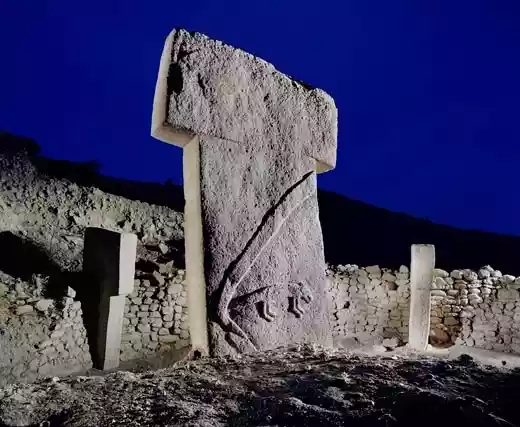
It is thought that Gobekli Tepe in Turkey constitutes the largest and oldest megalithic site known. It is dated to 12,800 years ago, the onset of the Younger Dryas. Coincidence?
We are told that the 300 megalithic stones found at Gobekli Tepe were suddenly created by hunter-gatherer people with no previous experience in such construction. Such a story is absurd.
Visitors to Peru (including myself) often travel to the busy city of Cusco in the high Andes. There one can marvel at another megalithic site known as Sacsayhuaman which overlooks the city. We are told that the Inca people in the 1400s created Sacsayhuaman using bronze chisels and stone hammers. Again, such a story is absurd.
The largest individual stones at Sacsayhuaman are estimated to weigh about 125 tons and are thought to come from quarries as far away as 22 miles. You must be joking??
One can also marvel at the extreme precision of the alleged Inca stonework. Notice the block below. Look very carefully. The mating surfaces are 100% perfect.
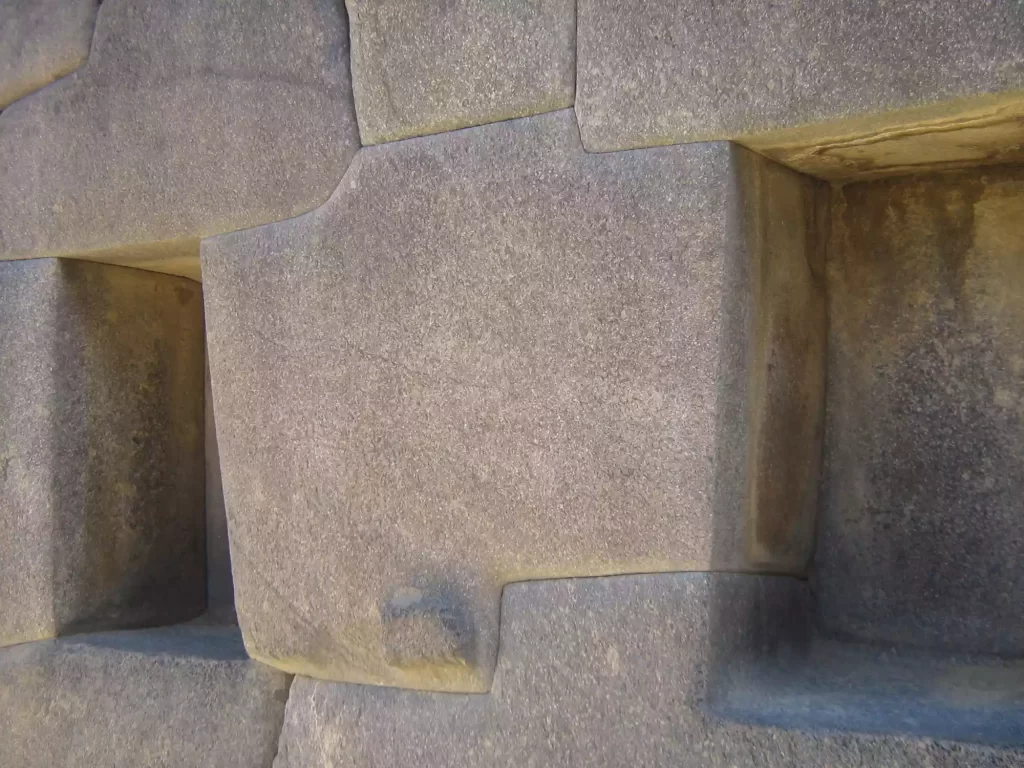
Equally absurd are proposed explanations for the construction of Stonehenge and the Great Pyramid.
It is plain as day that the creators of megalithic structures employed technologies and powers unknown to us today.
Gravity control? Sure, this sounds like fiction but why not? ET aliens know how to do it. Why not advanced beings in our ancient past?
Is your head about to explode? Bear with me. There’s more to come.
Graham Hancock’s Proposal
By applying an alternative interpretation of abundant physical and cultural evidence, and by citing the work of credible researchers, Graham Hancock proposes the following:
Some form of advanced civilization existed prior to the global disaster known as the Younger Dryas, about 12,800 years ago. All known traces of such civilization were wiped off the face of the earth.
He suggests that we will likely find traces left behind if we look for it. After all, the vast Amazon and Sahara desert (which was lush and green during the ice age) have been largely unexplored to date. The same is true of the large shallow underwater area known as the continental shelf.
He believes there were survivors of the catastrophe. Those people, with their advanced knowledge and abilities, traveled the world to pass on what had been lost.
These rare people created (or inspired) stone structures designed to endure the ravages of time for the benefit of future generations. Why go to the trouble to record knowledge in stone? Knowledge written on skins, leaves, and papyrus fades away as the underlying material decays. So they encoded some of their knowledge in stone. How do you encode important timeless knowledge in stone?
Meaning is found in the shape and position of stoneworks as well as symbolic art carved on the surface. It seems we have barely begun to decode the deep meaning left in stone.
These emissaries of the lost civilization would be later remembered as sages. supreme beings, even gods.
Supportive Cultural Evidence
For decades, Graham Hancock has had to deal with nasty personal attacks from the scientific community, especially archeologists who apparently feel threatened by his work. In a most unscientific way, Hancock has been literally banned from entering certain archeological sites. He is even prohibited from editing the Wikipedia page on his life and work. Others may edit this Wikipedia page but not Hancock.
Yet there is a lot of supportive evidence beyond what I have already described. Here are three examples:
(1) A particular people in the Amazon, the Tucano (and surely others), maintain an origin story closely resembling the view proposed by Hancock.
(2) In upper Egypt, at the Temple of Horus at Edfu, some of the walls are covered with inscriptions that say they are based on much older “source documents” that were falling apart. These inscriptions tell the story of the “homeland of the primeval ones” being pierced and assaulted by a giant snake coming down from the sky that caused a great flood that swallowed the homeland of the primeval ones. The story says some of the primeval ones survived. These survivors traveled to Egypt and build ancient mounds to mark places for future temples and pyramids. Furthermore, they traveled throughout the world on the same mission to preserve and restore what had been lost.
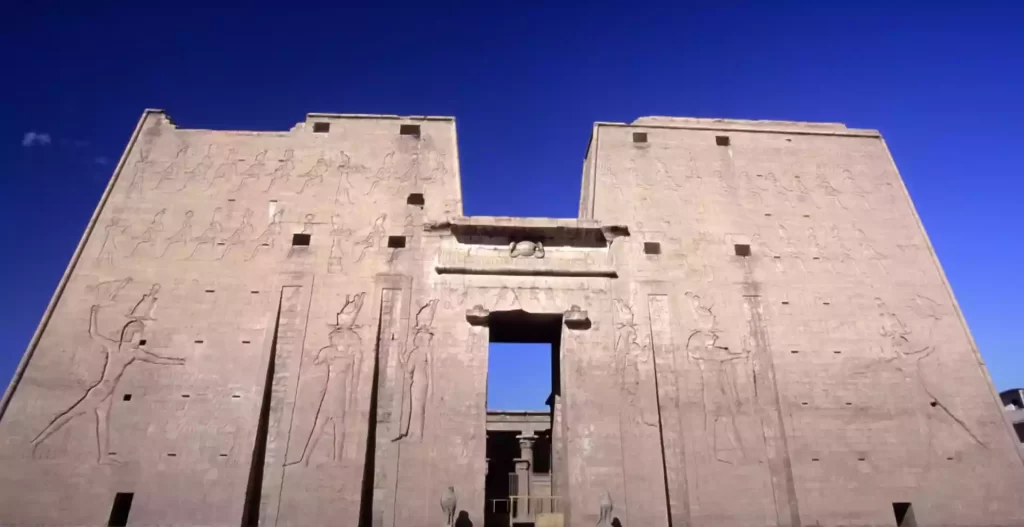
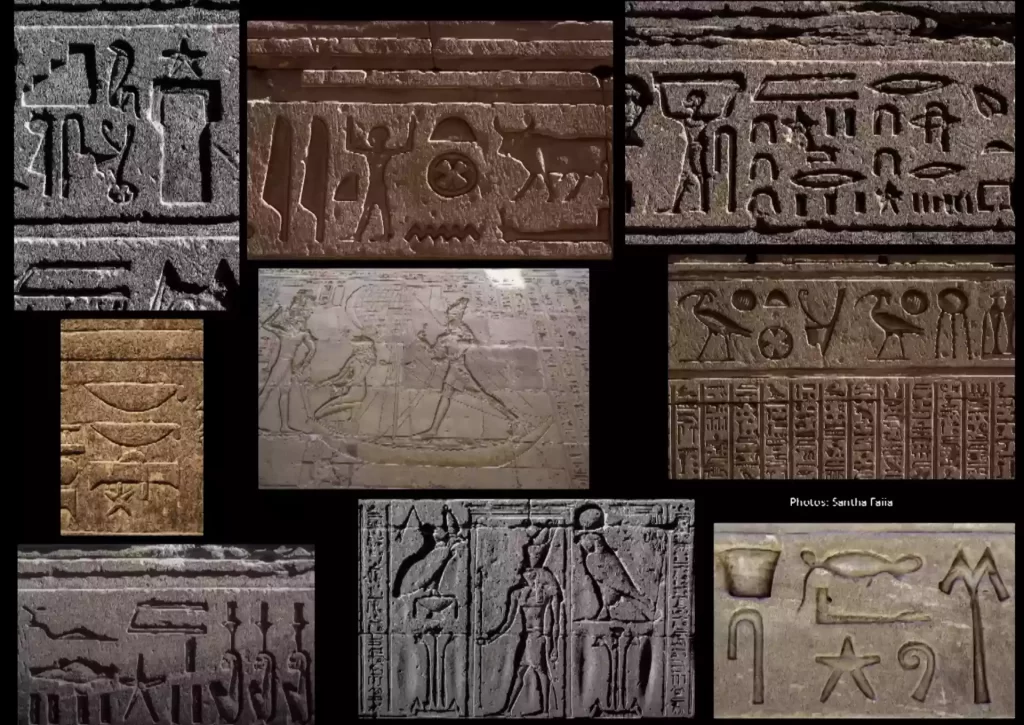
(3) Nearly identical religious symbolism is found in two different locations on two distant continents, Africa and the Americas. Specifically, I refer to ancient Egypt and the Mississippi valley in Louisiana. Since the points of similarity are specific and numerous, coincidence can be ruled out according to the principles of forensic investigation. How can this similarity be explained?
Hancock proposes a common source, a common human ancestor that brought these ideas long ago. Who? These would be the emissaries of the civilization destroyed during the Younger Dryas. These people, perhaps small in number but rich in knowledge, passed on their knowledge so that it would not be totally forgotten.
More Cultural Evidence
Evidence found at the now famous archeological site, Gobekli Tepe in Turkey, suggests that this site featured the “invention?” of both megalithic architecture and agriculture. The date? Guess what? That would be the exact endpoint of the Younger Dryas. That’s 7,000 years older than Stonehenge and 6,000 years older than most other recognized megalithic sites including the Great Pyramid (according to current dating). It is thought that Gobekli Tepe is not only the oldest but also the largest megalithic site discovered on Earth so far.
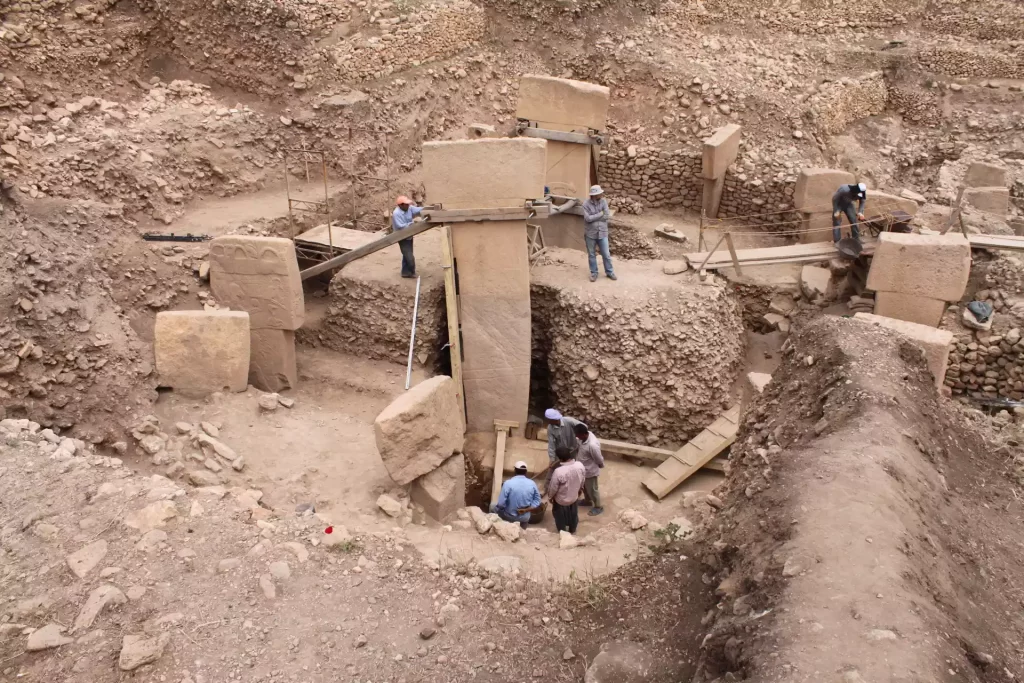
What is the mystery of Gobekli Tepe? According to archeological studies of the site, there was no gradual accumulation of knowledge by the nomadic hunter-gatherers who populated that region. No. The large number of megalithic stones and knowledge of agriculture seemed to appear suddenly out of nowhere.
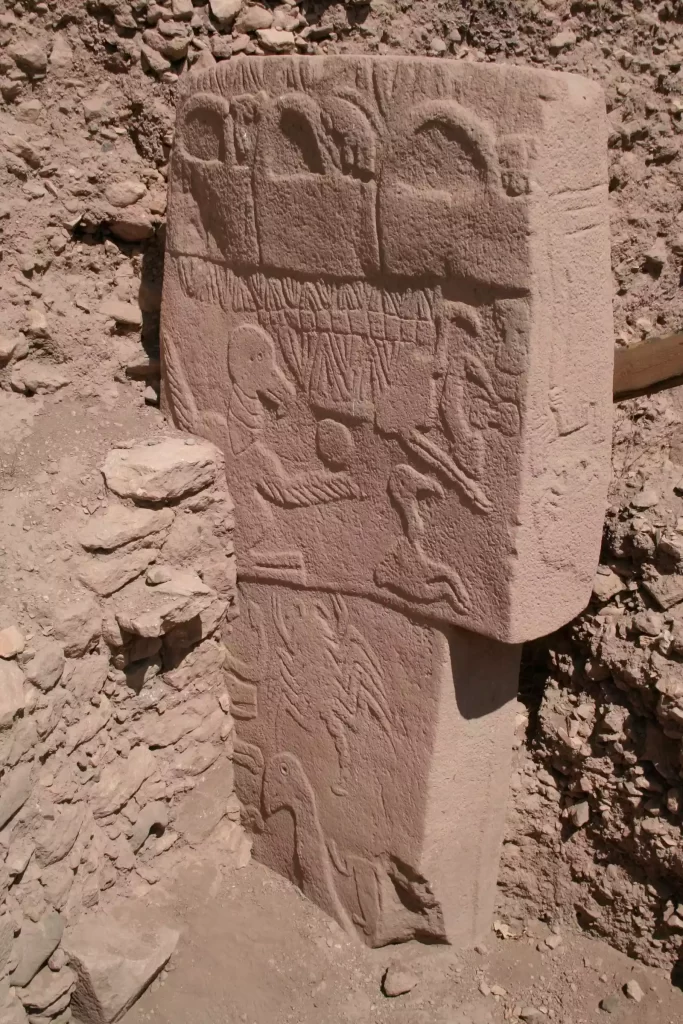
Graham Hancock suggests Gobekli Tepe represents a “technology transfer” from survivors of the great cataclysm to local people.
Notice the handbags carved into the upper area of this megalithic stone. This same handbag symbol is carved in stone in a large number of other sites in both the “old world” and the “new world.” Some think this handbag symbol represents the possession and passing on of knowledge that Hancock speaks of.
Plato’s Contribution
Plato describes the sudden destruction of an advanced civilization he called Atlantis. It was swallowed up by the sea at the dramatic end of the Younger Dryas, 11,600 years ago. Archeologists claim that Plato fabricated this story. He made it up. But read on.
As already noted, a possible cause of the end of the Younger Dryas was another celestial object, a large cometary fragment, crashing into the ocean at high velocity. This would have unleashed a monster tidal wave that could have obliterated Atlantis.
Furthermore, when Plato’s ancestor Solon traveled to Egypt at around 600 BC, he asked the priests how long ago was Atlantis destroyed? The priests told him 9,000 years ago. That corresponds perfectly with the dramatic end of the Younger Dryas. Coincidence? How many coincidences can we endure?
Supportive Archeological Evidence
The Great Pyramid lacks characteristics one would expect if it were really a tomb for a pharaoh. The King’s Chamber never housed a dead pharaoh. Unlike other pyramids that were actually tombs, the walls of the King’s Chamber are barren of any hieroglyphics. Strangely, there is no writing on the wall singing the praises of a deceased pharaoh.
Together with the two neighboring pyramids, these three giant stone structures align with the stars. But not today’s stars. They align with the stars as they appeared in the sky at the time of the Younger Dryas. Interesting.
Graham Hancock proposes that survivors of the Younger Dryas built (or inspired) the Great Pyramid as a time capsule for beings like us in the future. I had this same thought when marveling at the radically precise stonework found in great abundance in the Sacred Valley of Peru.
The precision stonework found in the Sacred Valley in the Peruvian Andes is able to withstand powerful earthquakes using a design beyond what we are able to produce today. That design involves the use of precisely shaped curved mating surfaces and edges.
What’s the point of building a high-tech wall of stone? It’s just a wall.
The astonishing precision of these stones, shaped out of very hard andesite, suggests to me that the beings who created them knew they would have something to say to generations far into the future.
More Egyptian Mysteries
The Sphinx in Egypt bears the classic and unmistakable marks of water erosion from heavy and sustained rainfall. Yet Egypt has not had this kind of sustained rain since the time the Sphinx was supposed to have been built. There is evidence to suggest that the Sphinx was built at the same time as other megalithic structures like Gobekli Tepe.
Currently, the Sphinx bears the head of a pharaoh. But the pharaoh head is too small. It’s out of proportion to the body. Hancock proposes that the original head was that of a lion. By the time 2560 B.C. came along, that lion head suffered the same damaging erosion as the body. So the Egyptians carved it down to the pharaoh head we see today.
Conclusion
How many coincidences can we tolerate? Though it may seem fantastical, the story put forward by Graham Hancock makes sense to me. It’s an alternative view based on an alternative interpretation of a mountain of known facts.
There are many mysteries from our ancient past. Some of these mysteries point to a single concept that irritates and threatens archeologists, the concept of a lost advanced civilization. Actually, that very irritation may provide a clue that there’s something interesting here, something that warrants further investigation.
For those who care to dig deeper
For those who care to dig deeper, I recommend the books and interviews of Graham Hancock who cites peer reviewed research papers that can be checked for verification and validation of the evidence behind these ideas.