
Originally published on Substack. Read and subscribe here. https://deferocontra258173.substack.com/p/how-an-inventor-thinks?r=3ouoi0
Some people walk past little annoyances every day without giving them a second thought. Others can’t help trying to fix them. I belong to the second group.
The first group ignores or tolerates those little annoyances. The second group might happily spend half an hour eliminating a squeaky door. They are consummate problem solvers. Which type are you?
Most people think inventing means patents, laboratories, or billion-dollar startups. I don’t. To me, inventing begins the moment you refuse to accept a small annoyance as “just the way things are.”
During engineering school I was taught that to understand the problem, to properly define the problem is half the battle. Here’s the entire battle from my perch.
- Define the problem.
- Look beyond traditional solutions.
- Experiment.
- Consider imperfect but effective options.
- Continue until the problem disappears—not when your solution looks elegant.
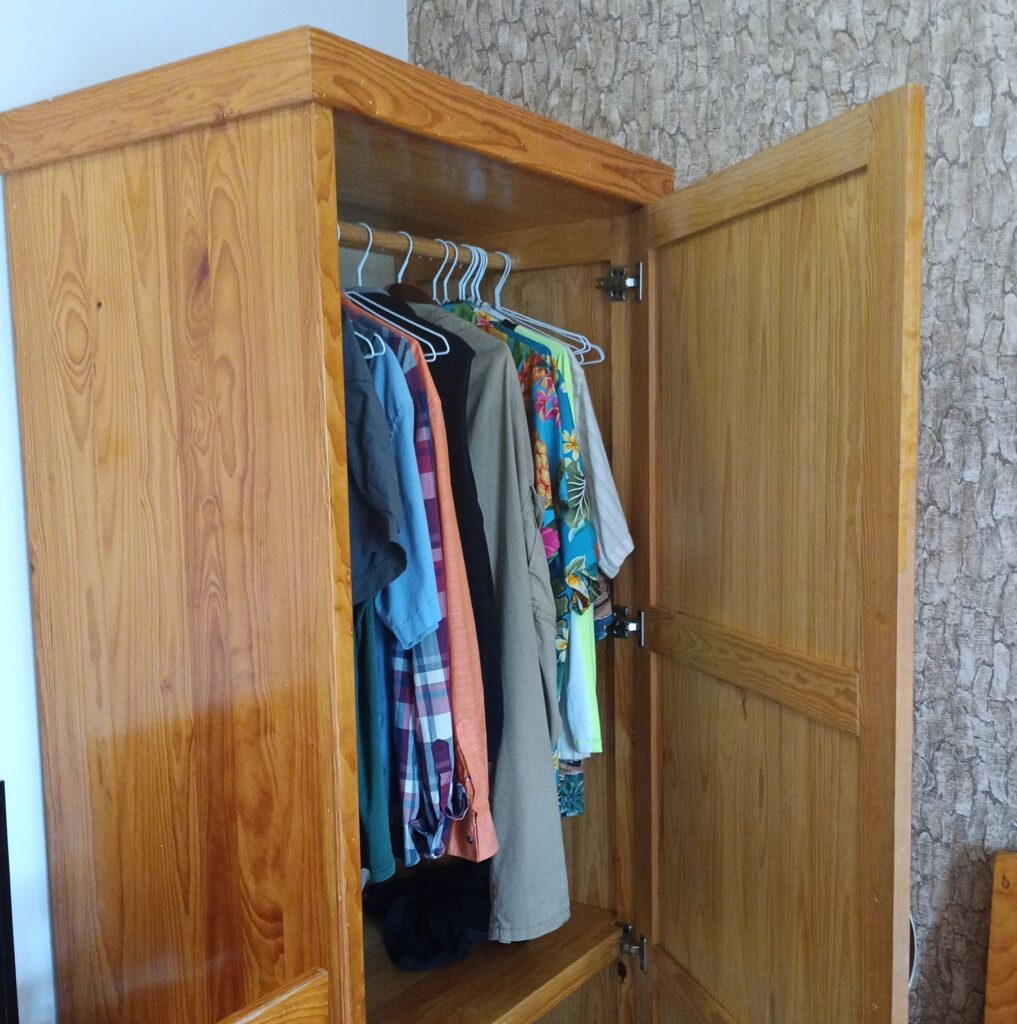
Here’s a recent example. My closet door would not stay open. Sounds trivial doesn’t it. Take into account the following details, and you’ll see why this was not so trivial.
For the past several days I’ve been staying in a nice hotel-like room in the central highlands of Vietnam. This climate features high humidity, It is known that a relative humidity above 60% can lead to clothing beginning to smell musty especially when there’s poor air circulation.
Half of my clothes were hanging in the closet. I knew from past experience in India that once clothing takes on a musty smell they’re permanently ruined. I didn’t want that. So how was I going to get the spring-loaded door to remain open for air circulation? That was the problem. There were no obvious solutions. Time to experiment.
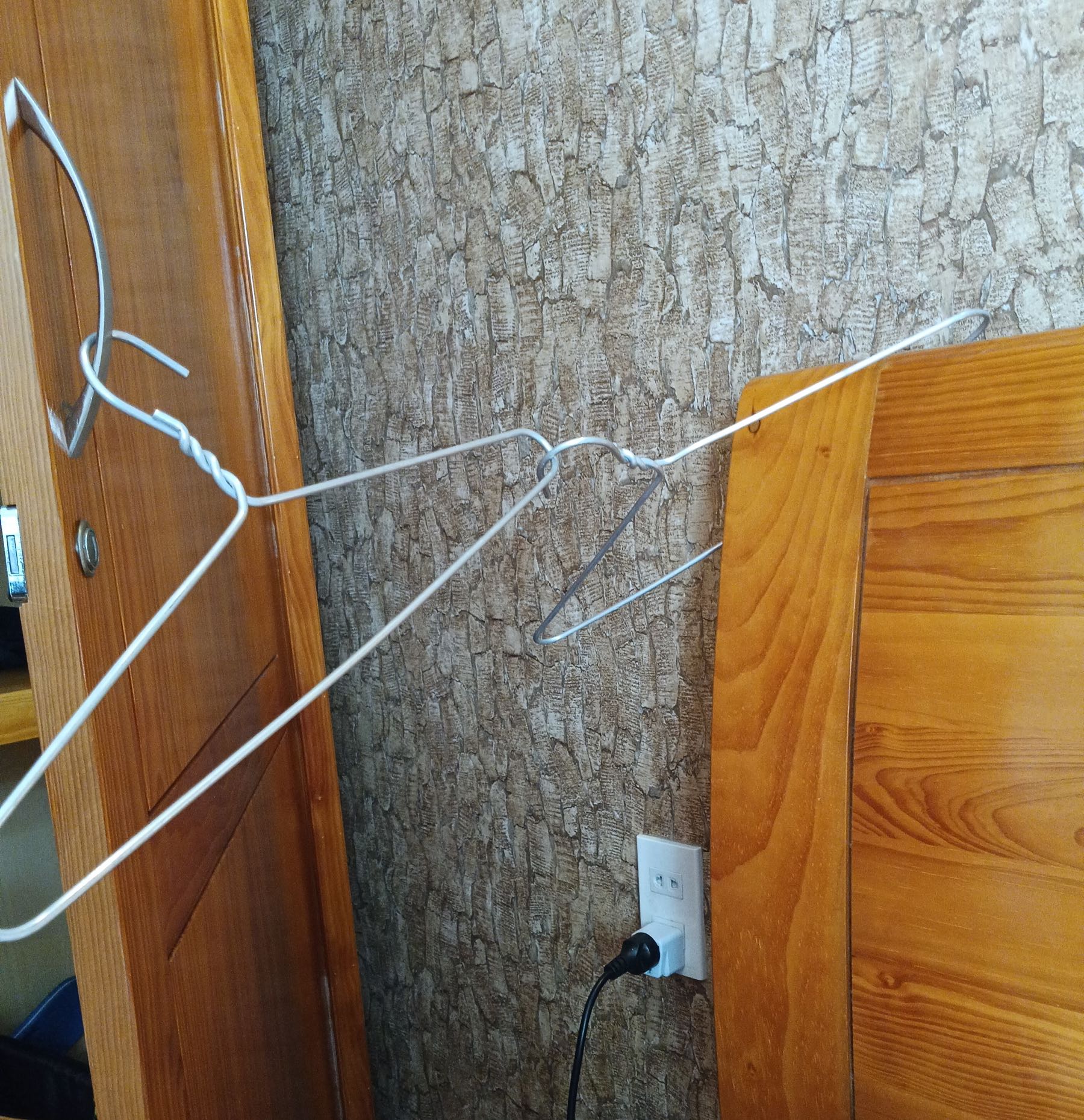
First I tried hooking the closet door handle with one of the hotel hangers, then using another hanger to reach the corner of the bed. Sure I had to bend one of the hangers a little to reach. But I knew I would bend it back before leaving, making it look good as new.
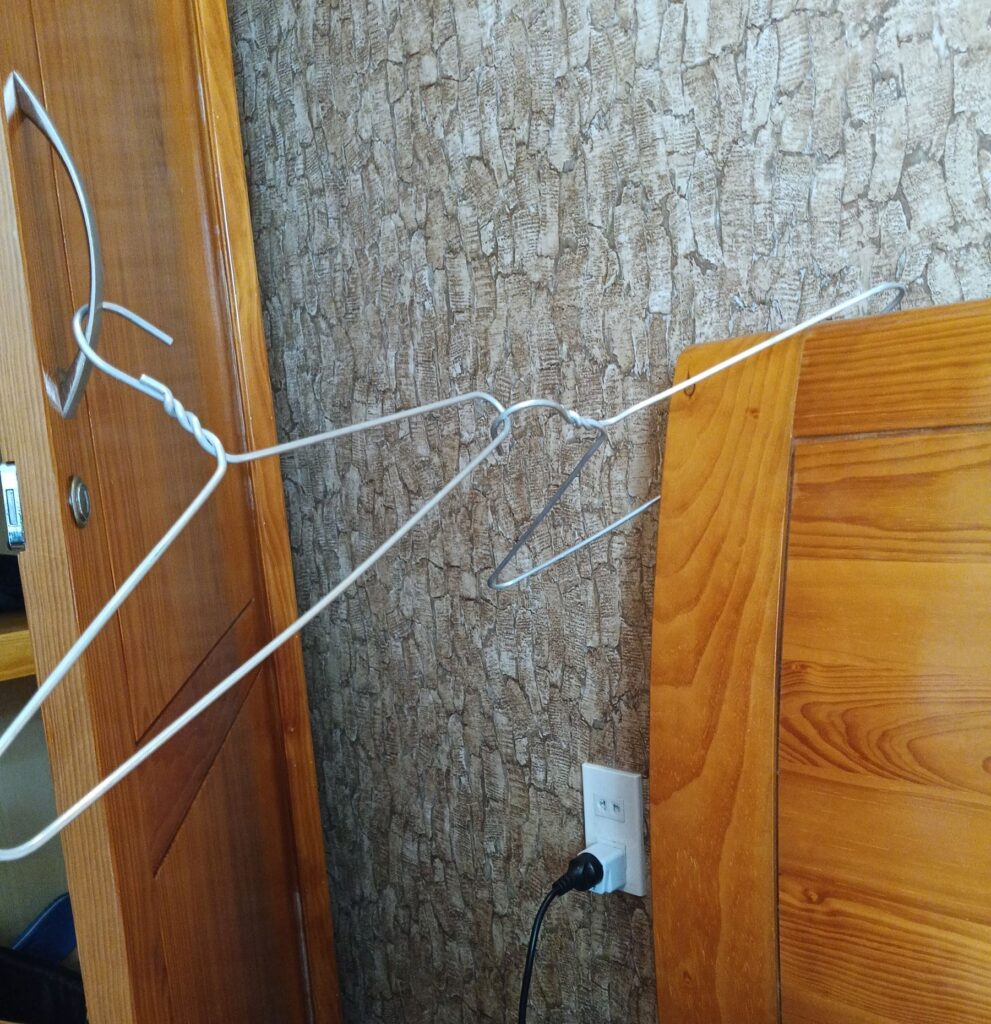
That first solution was downright ugly and lacked the pedigree of a true MacGyver. My solution needed to be at least a little elegant, or I would not be able to sleep at night.
Next I tried propping the door open with a shoe. Nah. That was no good, because the shoe would fall out of position each time I opened the door. And it didn’t make the door stay open far enough anyway.
Next I tried the “whole body” approach of stepping forward as though entering the closet. I realized I could stand there and turn my back to the door, holding it open. This way, I would have both hands free to retrieve the shirt I was after.
Yet, placing my whole body half inside the closet doesn’t qualify as a true solution. Why? Remember. The goal is to ensure adequate air circulation by getting the door to stay open… without me!
Then the best solution appeared. I recognized its worth immediately.
What if I were to take my carry-on suitcase and plop it down on the floor of the closet. It had the necessary weight to stay in place. I could position the suitcase to push on the closet door to keep the door open—to any degree. I loved this solution, because it was “adjustable.” I could make the door stay open as wide as I wanted.
You don’t need to invent the next iPhone to think like an inventor. Start with the squeaky door, the tangled charging cable, the cluttered desk, or the software menu that makes no sense. Small frustrations are invitations. Curiosity turns them into experiments.
Every invention begins the same way. Someone notices what everyone else has learned to ignore. Curiosity refuses to leave it alone until the annoyance disappears. That’s why inventing isn’t reserved for laboratories or billion-dollar startups. It begins in closets, kitchens, dashboards, and anywhere someone quietly says, “There has to be a better way.”